

Explicit teaching is a structured, research-based approach that helps students understand new skills with clarity and confidence. It is effective because teachers show students what to learn, model how to do it, and guide them through practice until they can apply the skill independently.
At its core, explicit teaching includes:
clear learning intentions
specific success criteria
a gradual release of responsibility (I Do → We Do → You Do)
ongoing checks for understanding
purposeful review and consolidation
This guide gives you a complete overview of explicit teaching, including lesson design, instructional practices, templates, examples, and resources that you can use straight away.
What Is Explicit Teaching?
Explicit teaching (sometimes called explicit instruction or explicit direct instruction) is a highly structured teaching approach where the teacher:
clearly states what students are learning
models the skill step-by-step
guides students to practise the skill with support
gradually withdraws support so students can apply the skill on their own
It removes ambiguity, reduces cognitive load, and ensures that students know exactly what success looks like before they begin.
Key components of explicit teaching include:
Learning intentions
Success criteria
Modelled instruction (I Do)
Guided practice (We Do)
Independent practice (You Do)
Checks for understanding
Review and reflection
If you are new to explicit teaching, you may find the following resources helpful:
👉 Structured Teaching Resources Library
The Explicit Teaching Lesson Cycle
The explicit teaching cycle begins with clarity and ends with independent mastery. Each part plays a specific role in helping students progress from unfamiliar to confident.
1. Learning Intentions
Learning intentions outline what students are learning and why it matters.
Read more: How to Write Learning Intentions
2. Success Criteria
Success criteria describe what successful learning looks like and show students how to achieve it.
Read more: How to Write Success Criteria
3. I Do (Modelled Instruction)
The teacher models the skill, thinking aloud and showing explicit worked examples.
Read more: How to Model a Skill in Explicit Teaching
4. We Do (Guided Practice)
Teacher and students practise the skill together using prompting, scaffolds and feedback.
Read more: 8 Guided Practice Ideas
5. You Do (Independent Practice)
Students apply the skill independently to demonstrate mastery.
Read more: Tips for Independent Practice
6. Review
Daily and lesson-end review in a spaced and sequenced way reinforces previous learning and strengthens retention.
Read more: Daily Review tips for better retention
Lesson Design & Instructional Practices Overview
Effective explicit teaching requires thoughtful lesson design. This involves determining the learning intention, selecting clear worked examples, planning guided practice steps, and identifying success criteria for student formative and summative assessment.
Well-designed lessons:
reduce cognitive load
sequence ideas from simple to complex
use examples and non-examples
provide enough guided practice for students to succeed
include regular checks for understanding
Below is an overview template that breaks down these essential elements.
👉 Access the Explicit Instruction Design & Instruction Overview:
https://www.canva.com/design/DAE_3AFTtGA/I9Ed8u_MpnwfWWUNw4YWmw/view
Explicit Lesson Presentation Template
Explicit teaching lessons are easier to deliver when the structure is visually organised and consistent.
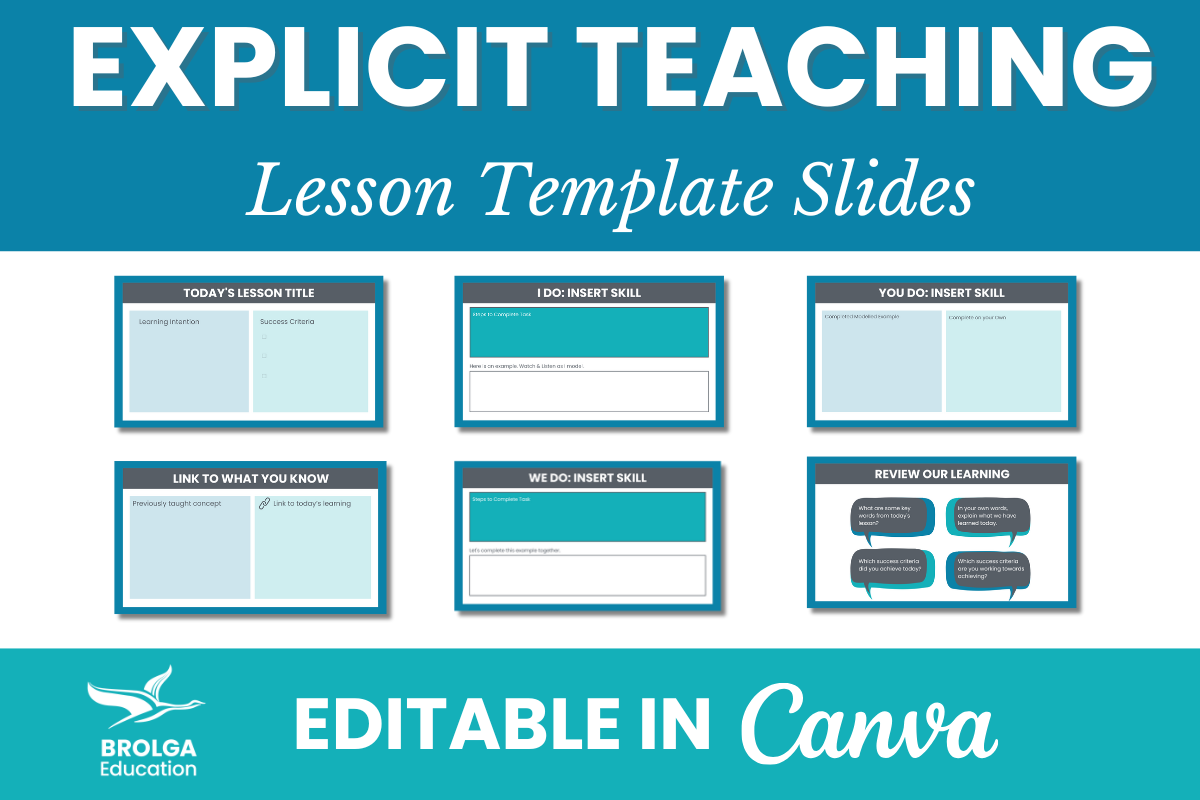
👉 Access the a free editable lesson template by subscribing:
This template includes:
Learning Intention & Success Criteria
Link to Prior Knowledge
Concept Development (examples and non-examples)
I Do / We Do / You Do scaffolded steps
Check for Understanding
Importance
Review
Each slide can be adapted to any learning area or year level.
Sample Explicit Teaching Lesson
Below is a sample lesson aligned with Year 3 Australian Curriculum (ACMMG064).
👉 Access a sample explicit teaching lesson here
This sample demonstrates:
sequencing of concepts
explicit worked examples
guided practice steps
checks for understanding
opportunities for review
Why Explicit Teaching Works
Explicit teaching is strongly supported by educational research because it:
provides clarity
reduces cognitive load
supports students with diverse learning needs
builds mastery through repetition and scaffolding
improves student outcomes across subjects
benefits early career teachers and experienced teachers alike
It is particularly powerful for:
foundational reading and writing skills
mathematical procedures
content-heavy subjects
students requiring additional support
classrooms with varying skill levels
Build Your Explicit Teaching Skills & Toolkit
If you are building a consistent explicit teaching approach across your classroom or school, you may like to explore the following resources:
Explicit Teaching Masterclass Video Series
About Brolga Education
Hi 👋 I’m Trudy, a Lesson Design & Instructional Coach
I help teachers plan & deliver clear lessons, by simplifying explicit instruction that engages and drives progress.
Read more about my journey with Explicit Teaching here
Connect with me on Instagram