

Modelling is one of the most powerful parts of explicit teaching, yet it is also the stage that slips quickest into over-talking, over-explaining or disengaging students. A strong I Do looks deceptively simple. The teacher completes one clear worked example, in real time, with pen in hand, while students watch the thinking unfold.
This is not lecturing. It is not talking for ten minutes straight. And it is not presenting a fully-formed slide for students to copy.
A true I Do shows students exactly how to apply a skill. It makes the steps visible. It keeps cognitive load low. And every part of the demonstration links back to the success criteria.
➡️ Read How to Write Success Criteria: Clear Steps, Examples and Free Templates
By the end of the I Do, students should be able to describe what the teacher did, why the steps mattered and what success looks like before they try it themselves.
What Makes an Effective I Do?
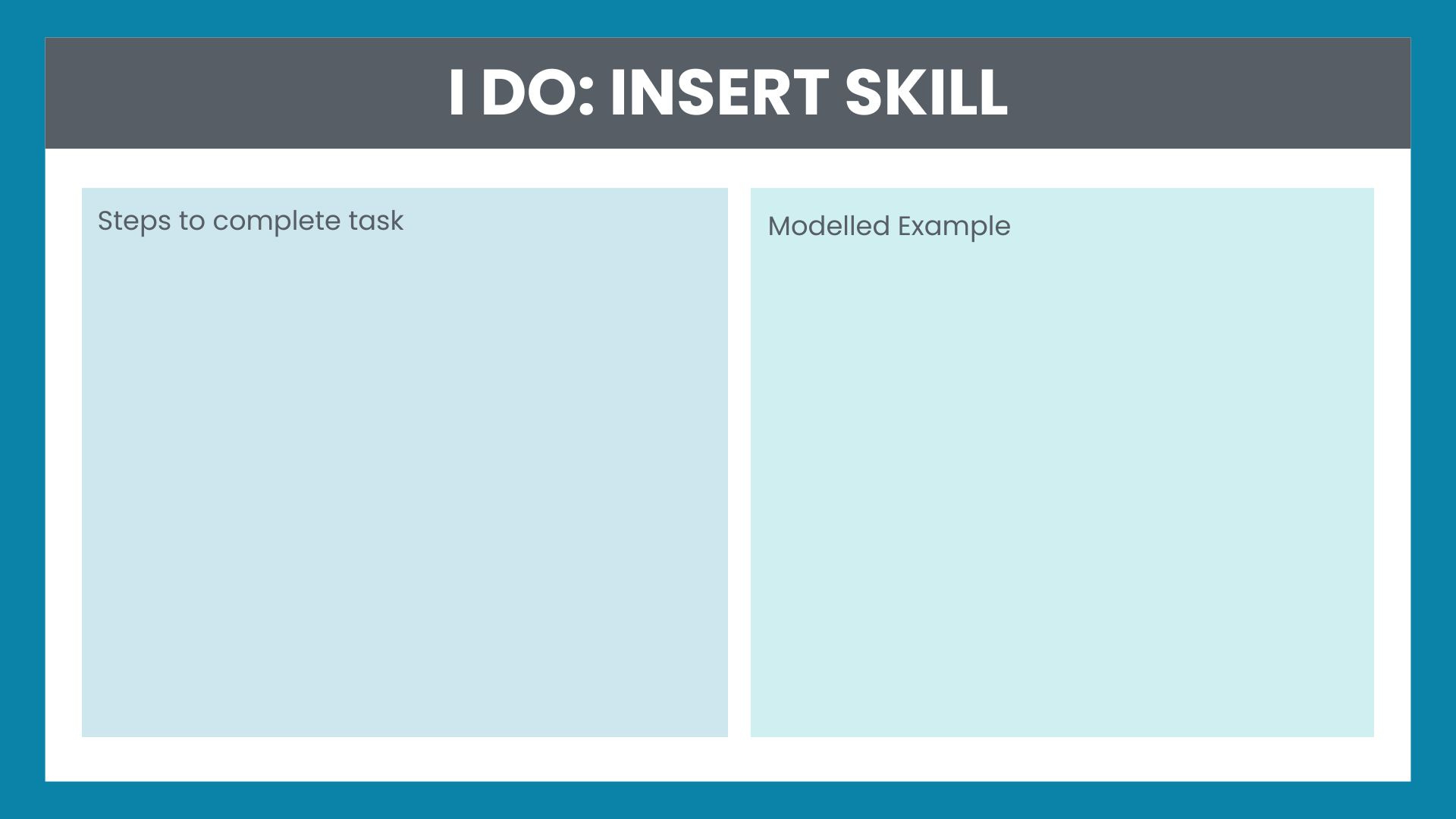
A strong modelled instruction always begins with the learning intention and success criteria. Students need to know the purpose of the example and what to look for as you demonstrate the skill.
➡️ Read How to Write Learning Intentions: A Step-by-Step Guide for Explicit Teaching
The worked example should match the success criteria exactly. If the criteria say students will identify three points, your model must show three points. If the criteria say students will use a specific strategy, your model must demonstrate that strategy precisely.
The modelling itself should be short and direct. Most teachers over-talk because they are trying to fill gaps that the worked example will solve on its own. Aim for no more than five minutes before you pause, use an engagement norm or have students track with you. Attention dips quickly, and the goal of the I Do is clarity, not a monologue.
As you model, think aloud. Narrate the decisions you are making. Show students how you move through each step. Refer constantly to the success criteria. “Notice that I am checking criterion two before I move on…”, “I’m adding this detail because it connects back to what success looks like…”. These moments are what make thinking visible.
And most importantly, complete the worked example in the moment, in front of the students. A live model is far more effective than a finished (or clicked-through) one. It reduces cognitive load, allows for correction and helps students see the process rather than the product.
Students’ Role During the I Do
During the I Do, students are expected to watch and listen. This is not a time for them to write, ask questions, or attempt the task. Their role is to follow the teacher’s thinking, track each step as it is modelled, and observe how the success criteria are applied in real time. The focus is on attention, not participation. If the teacher has been speaking for more than five minutes, a brief engagement cue may be used to re-centre attention, but the overall expectation remains the same. The I Do is a clarity phase. Students stay with the teacher, stay focused, and allow the modelling to build their understanding before they try the skill themselves.
These behaviour expectations should be taught in the beginning of the year and revisited at the start of each term. Having some visuals, posters, lesson prompt cards will help with managing expectations and behaviour during the modelled instruction.
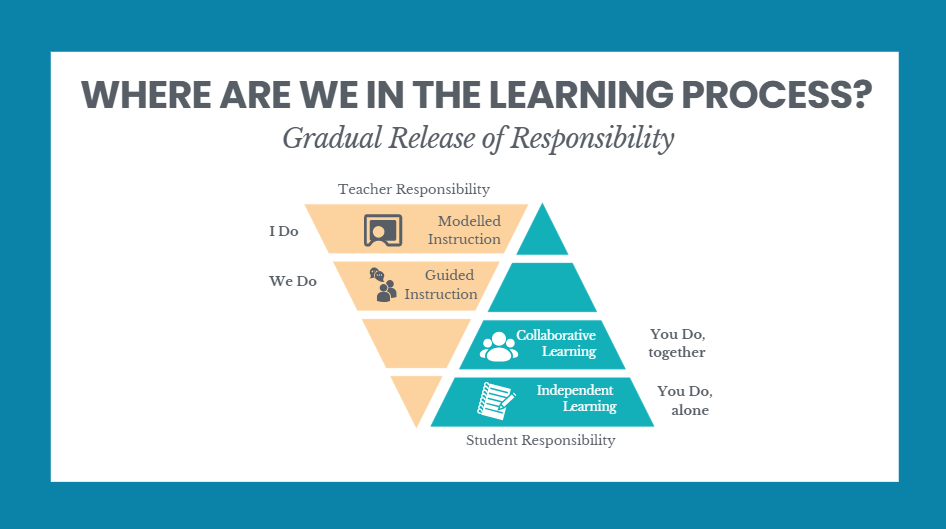
The above visual is available in the Explicit Teaching Daily Slides Pack
How to Make Modelling in Real Time Easier for the Teacher
To help with this, teachers can have a copy of the completed worked example that students never see. This is where true confidence in modelling comes from.
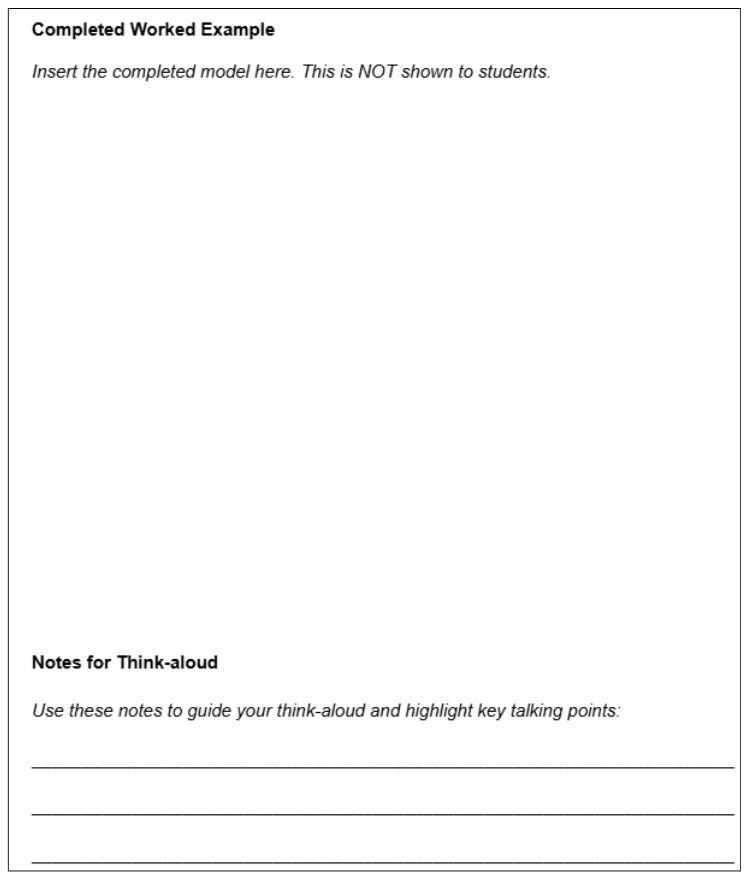
A Teacher Prep Notes Page can act as your presentation notes. It shows the fully completed worked example, annotates the decisions you want to highlight, and includes the language you will use in your think aloud. It removes guesswork. You are no longer trying to remember what to say next or worrying about trying to think of an example on the spot (eg. when modelling for writing), missing a step or making a mistake. You can focus entirely on your delivery.
When you model from this kind of structure, the I Do becomes lighter, cleaner and far more consistent lesson to lesson.
Before Moving into We Do
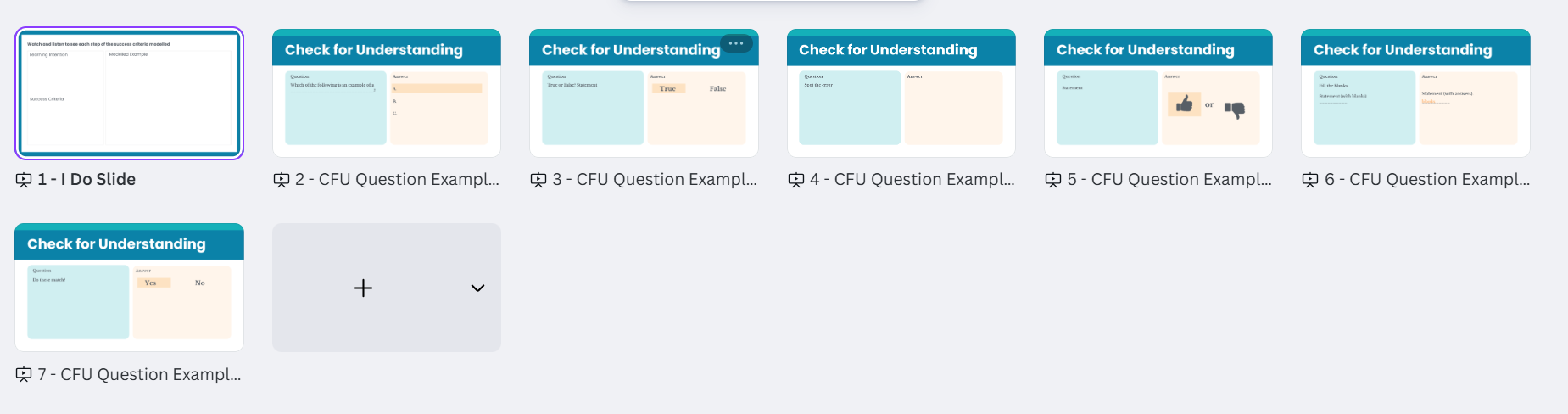
Before moving into guided practice, you should run one or two quick checks for understanding. This is not a retell of the model or a discussion of the steps. It is a fast, low-effort question to confirm that students recognised the skill you just demonstrated. The response should take only a few seconds. Students might hold up A or B on a whiteboard, choose the correct example, or identify which option matches the success criteria. This rapid check simply tells you whether the class is ready to attempt the skill with support. If most students answer correctly, you move into We Do. If not, you briefly clarify the point of confusion and continue.
➡️Read more about 15 Quick Checks for Understanding in Explicit Teaching here
✨The Worked Example Modelling Pack

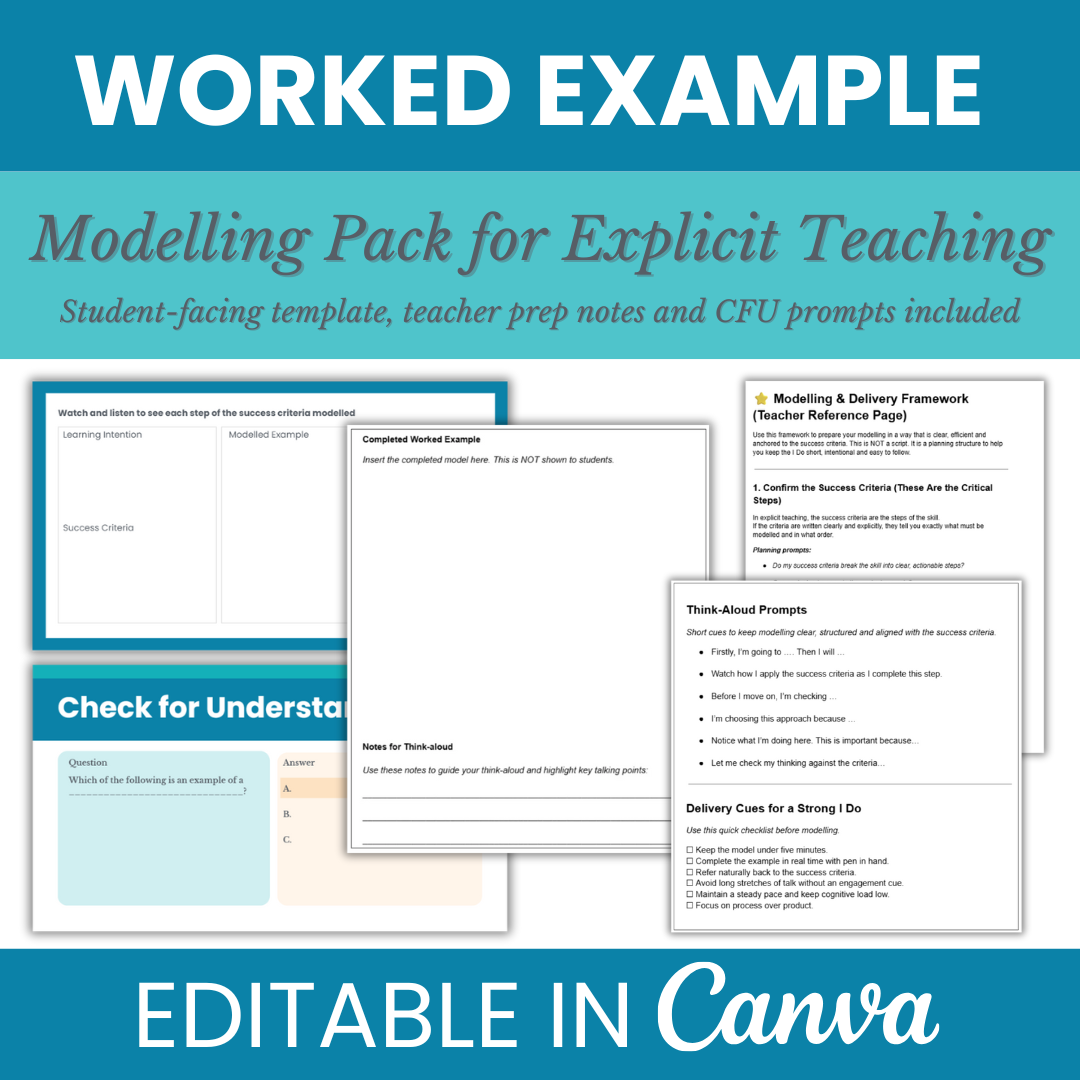
This classroom-ready pack is designed for teachers who want to model with clarity, confidence and consistency – without spending hours creating slides or guessing what to say next during the I Do.
Every tool inside the pack aligns with best-practice explicit teaching and the modelling framework outlined in this post. It supports teachers to deliver short, focused demonstrations that follow the success criteria step by step and keep cognitive load low.
Inside the pack you’ll find:
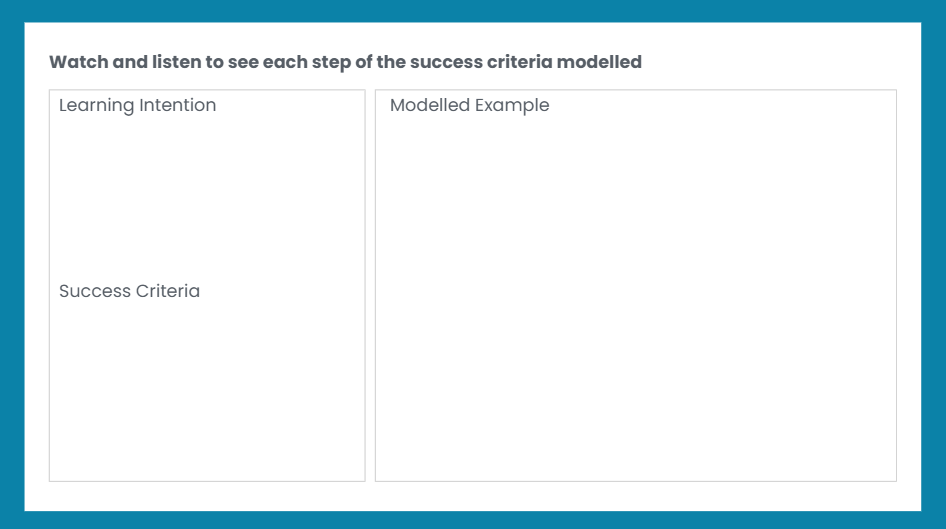
1. Worked Example Lesson Template (Student-facing)
A clean, universal template suitable for any subject or year level.
Teachers simply add the learning intention, insert the success criteria (which double as the critical steps), and complete the worked example live in front of students, in the space provided.
Nothing overloaded. Nothing distracting.
Just a simple structure that keeps the focus on the skill being modelled.
2. Modelled Instruction Teacher Prep Notes & Delivery Framework
This planning page is the core of the pack.
It includes space for:
the completed worked example (not shown to students)
annotation notes for key talking points
think-aloud cues to make your thinking visible
a delivery framework to guide planning structure and to help you keep the I Do short, intentional and easy to follow.
a spot for your quick check for understanding question before moving into We Do
This reference page acts like teacher presentation notes – not a script, but a clear structure that helps teachers stay focused, concise and confident during the I Do.
3. Quick Check for Understanding Prompts (Before Moving to We Do)
A short set of rapid-response CFU ideas teachers can use immediately after the modelled example to confirm students recognised the skill.
These checks take seconds, require minimal writing, and help teachers decide whether the class is ready for guided practice.
Why Teachers Love This Pack
These tools are intentionally simple, flexible and universal.
They enhance — not complicate — explicit teaching.
They allow any teacher, in any subject, to model a skill clearly, confidently and consistently.
Access the Modelling & Worked Example Pack: I Do Templates for Explicit Teaching
Brolga Education
Created by Trudy Mayo — explicit teaching specialist & curriculum writer.
💌 New here? 📚 Follow on Instagram for daily tips & behind-the-scenes: @brolgaeducation